Why Thermostat Settings Matter More in Savannah
When temperatures start climbing in Savannah, your thermostat becomes one of the most powerful tools for controlling comfort and energy costs. Finding the ideal thermostat settings for our hot, humid spring and summer can help your air conditioner run efficiently while keeping indoor air comfortable.
Many homeowners either set temperatures too low — driving up bills — or too high, leaving the home warm and sticky. The goal is balance: cool enough to feel comfortable, efficient enough to avoid wasting energy during the long cooling season.
Free Wifi Thermostat with New System Install
Ideal Thermostat Settings for Spring and Summer
1. When You’re Home During the Day
Recommended: 76–78°F
This range balances comfort and efficiency for most Savannah homes. At these temperatures, your AC can maintain steady cooling while removing moisture from the air.
Lower settings may feel cooler initially but often increase energy costs without providing proportional comfort benefits.
2. At Night
Recommended: 72–75°F
People generally sleep better in slightly cooler conditions. Lower nighttime settings are reasonable because outdoor temperatures drop, reducing the workload on your system.
Ceiling fans can help maintain comfort without lowering the thermostat further.
3. When You’re Away
Recommended: 82–85°F
Raising the temperature while the house is empty prevents unnecessary cooling while still protecting the home from excess humidity buildup.
Avoid turning the system off completely. Restarting from extreme indoor heat forces your AC to work harder and longer.
Why “Set It and Forget It” Isn’t Ideal
Savannah’s weather changes quickly in spring. Mild mornings can become hot afternoons.
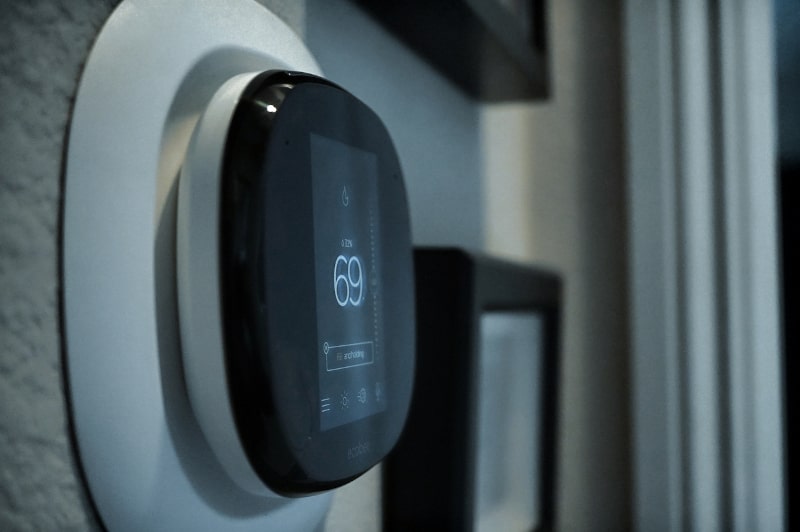
Programmable or smart thermostats allow automatic adjustments throughout the day, maintaining comfort without manual changes.
Proper scheduling can reduce cooling costs by up to 10 percent annually.
The Role of Humidity Control
Temperature alone does not determine comfort.
Your AC removes moisture as it cools, but oversized systems or short run cycles may leave the air damp. That is why some homes feel sticky even at lower temperatures.
Maintaining steady run times improves both cooling and dehumidification.
Common Mistakes That Increase Cooling Costs
- Setting the thermostat extremely low to cool faster
- Turning the system off during the day
- Ignoring airflow issues or dirty filters
- Blocking vents with furniture
- Leaving windows or doors open
- Your system cools at a fixed rate.
Lower settings do not accelerate the process, they just extend how long it runs.
How Smart Thermostats Improve Efficiency
Modern thermostats can:
- Automatically adjust temperatures based on occupancy
- Learn your schedule
- Provide energy usage reports
- Allow remote control from your phone
For many homes, they offer one of the fastest returns on investment for energy savings.
When Thermostat Settings Don’t Solve the Problem
If your home still feels uncomfortable despite proper settings, the issue may not be the thermostat.
Possible causes include:
- Poor insulation
- Air leaks
- Duct problems
- Incorrect system sizing
- Low refrigerant levels
- Aging equipment
A professional evaluation can identify the real source of inefficiency.
What Homeowners Usually Do Next
- Adjust thermostat settings to recommended ranges
- Install or program a smart thermostat
- Use ceiling fans to improve comfort
- Schedule AC maintenance before peak summer heat
- Address airflow or insulation issues if comfort remains uneven
Small adjustments now can prevent major discomfort and high energy bills later.
Maintaining comfort in Savannah’s climate is about managing both temperature and humidity. The right thermostat strategy helps your system work efficiently instead of constantly struggling to keep up.
If you want personalized guidance or an evaluation of your cooling system, Byrd Heating & Air can help ensure your home stays comfortable all season long.
Ask Byrd. Your HVAC Authority. 40 Years Serving Savannah.

