
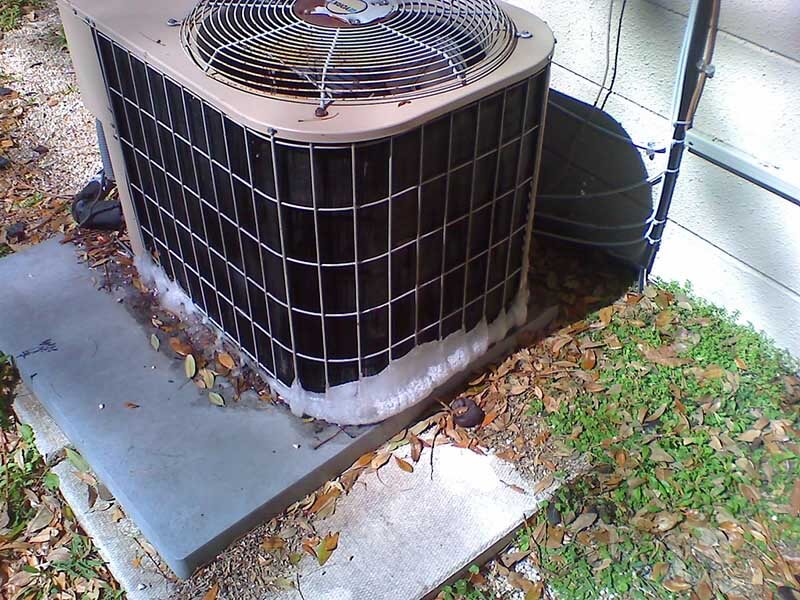
Winters in Savannah, Georgia, are typically mild, but even the Deep South isn’t immune to ice storms. Unfortunately, since local homeowners often don’t experience severe winter weather, they may be ill-equipped to handle frozen heat pumps. To prevent this problem from ever happening to you, here are a few tips that will help you stay ahead of the ice.
Understand the Common Causes of Frozen Heat Pumps
Knowledge is key if you hope to prevent your heat pump from freezing during a freak winter ice storm. The most common cause, obviously, is chilly temperatures. When the temperature dips closer to freezing, you may notice ice accumulating on the coils or refrigerant lines. Depending on your heat pump model, it may offer a defrost cycle that can combat brief freezing periods.
Low refrigerant levels are another common cause of freezing. Heat pumps are more susceptible to ice when refrigerant levels are low. Calling in an HVAC professional to inspect your heat pump prior to winter is a good option, as any HVAC technician will ensure the pump has plenty of the required refrigerant.
Improper installation is another culprit. When a heat pump is installed improperly, airflow can become blocked, causing the appliance to freeze. This is why it’s crucial to hire a licensed and experienced HVAC professional for all of your heating and cooling needs.
Locate the Source of the Problem
Heat pumps will often develop ice, even in the summer. This is why so many feature a defrosting cycle. If your heat pump is completely covered in ice, however, you want to turn it off and remove the ice. This may require that you hose off your outdoor unit or allow it to thaw if your model doesn’t have a defrost cycle.
In some cases, exterior causes are contributing to a frozen heat pump. For example, if your gutter is dripping water directly on the heat pump, you can remedy the situation by repairing the gutter or redirecting the water flow. If the pump has settled too far into the ground for there to be proper drainage, elevating it with special feet or blocks can help, but this should be done by a technician.
Run the Defrost Cycle
Modern heat pumps feature a defrost cycle because they’re all prone to developing ice. The defrost cycle works by reversing the valve to air conditioning mode, which switches off the outdoor fan and turns the outdoor evaporator into a condenser. This warms the high-pressure refrigerant. When that circulates through the outdoor coil, it melts the ice.
Even older models tend to feature defrost settings, although they may use mechanical timers instead of convenient temperature sensors and control modules. If your heat pump is an older model and you’ve had difficulty running the defrost cycle, it may be time for an upgrade.
Schedule an Annual HVAC Maintenance
There are many things you can do to resolve a frozen heat pump. Removing leaves and debris from a blocked outdoor coil, for instance, is an easy fix for any homeowner. When you can’t identify the problem yourself, however, you’ll need to call an HVAC technician.
A few problems causing your heat pump to freeze may include a bad defrost relay, a bad defrost control or timer, a sticking reversing valve, a restriction, or a bad fan motor. Scheduling your annual HVAC service before winter sets in can help you avoid these common issues.
Many homeowners like to schedule their preventive maintenance in late fall or early winter as they start to switch over their air conditioners for heat. This is generally a smart option, although HVAC professionals do tend to be busier between seasons. There’s certainly nothing wrong with a midwinter checkup, and it could, in fact, give you an advantage.
Unlike some homeowners, you’ll be able to tell the technician about any problems you’ve had with your heating system since turning it on for the winter, which can help them identify and repair any issues more quickly.
Stay on top of your frozen heat pump this season. When you need additional help solving your home’s heating problems, call Byrd Heating and Air Conditioning at 912-373-8447.
Image via Flickr by blisschan

